
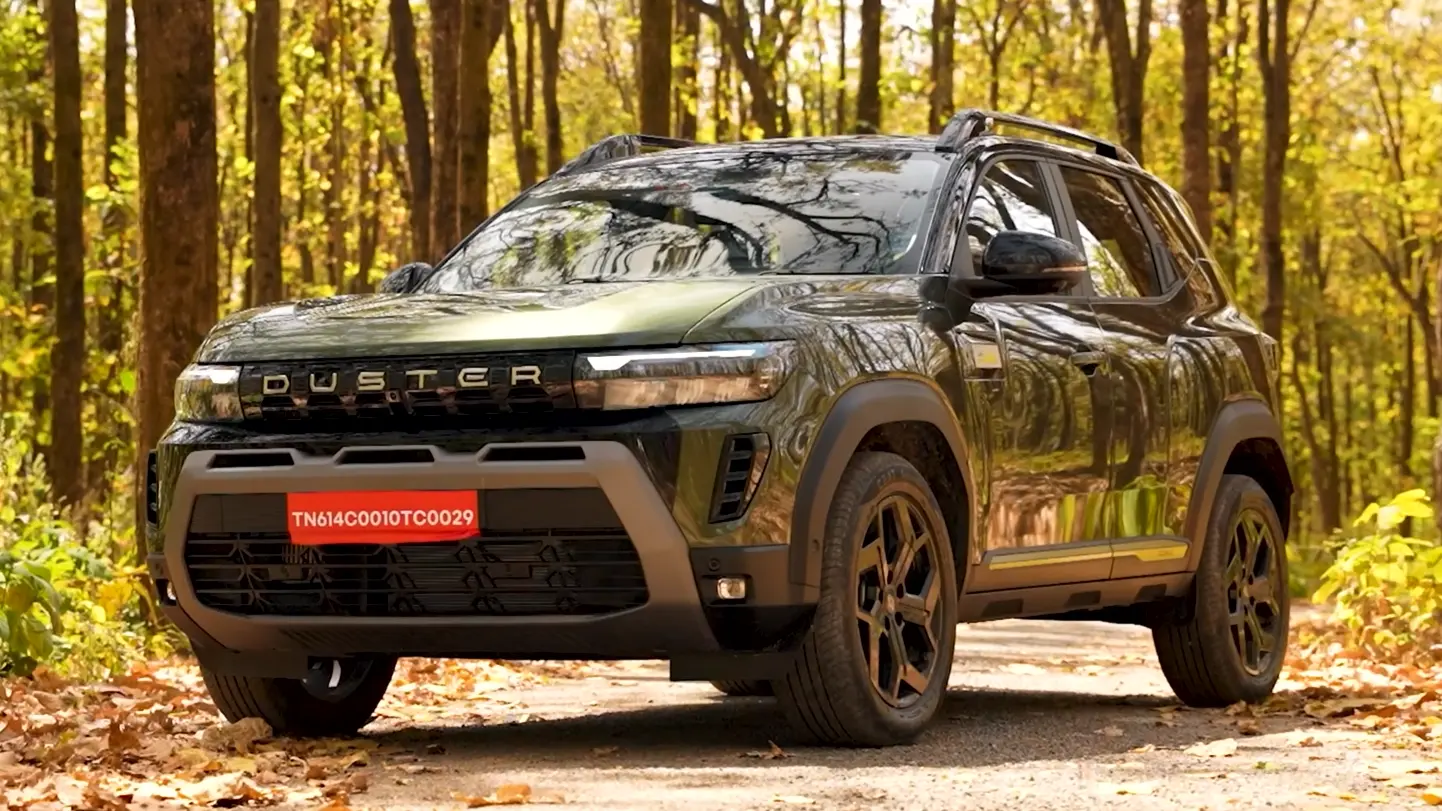
The Renault Duster Strong Hybrid E-Tech 160 has arrived in India with an ARAI-certified mileage figure of 29 km/l and a starting price of ₹16.99 lakh, ex-showroom. Its strongest attraction is the combination of fuel efficiency and petrol-electric convenience: it is an automatic SUV that does not need to be plugged into a charger.
That makes it worth a closer look for Indian buyers who cover substantial distances, spend time in urban traffic and want to reduce petrol consumption without planning charging stops. But the mileage headline needs context, and the most desirable cabin features are not included in every variant.
This is a researched launch guide, checked on 17 October 2026, using Renault’s India-specific Hybrid brochure, its official mileage announcement and launch-price reporting. We have not road-tested this car. Certified efficiency and manufacturer claims are identified below.
Duster Hybrid at a glance
| Item | What is offered |
|---|---|
| Certified mileage | 29 km/l, ARAI-certified; actual mileage will vary |
| Hybrid system | 1.8-litre petrol engine, two electric motors and a 1.4 kWh battery |
| Combined power | 160 PS; this is system output, not the petrol engine’s output alone |
| Transmission | Multi-mode automatic |
| External charging | Not required |
| Introductory prices | ₹16.99–19.49 lakh, ex-showroom |
| Ground clearance | 212 mm, as listed in the Hybrid brochure |
Sources: Renault’s 9 October mileage announcement and India-spec Hybrid brochure.
1. Mileage is the biggest reason to consider it
The headline figure is 29 km/l under the ARAI certification process. It gives buyers a useful reference when comparing officially certified figures, but it is not a promise that every owner will achieve 29 km/l on every journey. Traffic, average speed, air-conditioning, gradients, tyre pressures, load and driving style all influence the result.
The useful question is not simply “Will it give 29?” It is “How much petrol will I use on my normal route, and is that saving enough to justify the purchase price?” A longer test drive on familiar roads is more informative than judging the car only by its launch figure.
What could fuel spending look like?
The calculation below assumes 1,000 km a month and an illustrative petrol price of ₹100/litre. ₹100 is a calculation assumption, not a statement of today’s fuel price in any Indian city. The 24 and 20 km/l rows are hypothetical scenarios, not tested or predicted Duster results.
| Efficiency used | Petrol for 1,000 km | Cost at ₹100/litre |
|---|---|---|
| 29 km/l — certified reference | 34.5 litres | About ₹3,448 |
| 24 km/l — hypothetical | 41.7 litres | About ₹4,167 |
| 20 km/l — hypothetical | 50 litres | ₹5,000 |
Use your local petrol price and annual distance when comparing ownership costs. Calculate any hybrid purchase-price premium against a similarly equipped alternative, rather than comparing a well-equipped hybrid with the cheapest petrol variant. Fuel savings alone do not cover insurance, financing, servicing, tyres or depreciation.
2. Hybrid convenience without a charging routine
The Duster combines its petrol engine with a traction motor and a starter-generator. Its battery can recover energy during braking and deceleration, while the hybrid system manages when the engine and motors operate. There is no requirement to connect it to a home wallbox or public charger.
That is a practical selling point for apartment residents and buyers who do not have dependable charging access. It should not be confused with a battery-electric SUV, however: petrol remains part of its energy supply, and “self-charging” does not mean the vehicle generates free energy.
Renault also advertises up to 80% of city driving in EV mode. Its website footnote defines this in terms of travel time under an in-house urban WLTC test phase, with results depending on conditions. It does not mean 80% of every journey’s distance will be electric, or that the petrol engine will remain off throughout a city commute. Read Renault’s Hybrid explanation and test-condition footnotes.
3. The useful features depend on which variant you buy
For an India-focused buying decision, the Hybrid-specific equipment list matters more than a generic Duster feature list. Features advertised for another powertrain, country or older trim should not automatically be assumed to apply to this version.
| Variant | Introductory ex-showroom price | Notable equipment to check |
|---|---|---|
| Evolution | ₹16.99 lakh | 10.1-inch openR link multimedia screen and cruise control |
| Techno | ₹18.99 lakh | Electric panoramic sunroof, hands-free access card with push-button start, full LED headlamps |
| Emotion | ₹19.49 lakh | 10.25-inch TFT driver display, powered tailgate, electric and ventilated front seats with six-way adjustment |
Prices are reported at the 17 October launch and are introductory. Confirm the current price, colour surcharge, on-road quotation and exact equipment before paying. The feature column is a selection of highlights, not a complete equipment matrix. Sources: ETAuto launch pricing and Renault’s Hybrid brochure.
For hot-weather Indian use, ventilated front seats may be more useful day to day than a visual styling upgrade. A powered tailgate can help when carrying shopping or luggage, while the sunroof is primarily a comfort and preference decision. These are reasons to assess Emotion or Techno, rather than reasons to assume the entry model has every feature shown in advertising.
4. Practical SUV details — with an important boot-space caveat
Renault lists 212 mm of ground clearance for the Hybrid. That is a relevant specification when assessing steep ramps and uneven access roads, but it does not establish the car’s off-road capability or guarantee clearance when loaded. Check the route, vehicle load and the car’s actual configuration.
The brochure’s boot figures deserve particular attention: it lists approximately 372 litres up to the parcel shelf and 544 litres up to the roof. Those are different loading limits, not interchangeable measurements. If you travel with family, bring your usual suitcases to the showroom and check the space below the parcel shelf. Do not treat the larger roof-height number as the same as concealed luggage space.
5. Safety and warranty information worth checking
The Hybrid brochure lists six airbags, electronic stability control, traction control, TPMS, ISOFIX, hill-start assistance and a rear-view camera among its standard safety equipment. These are useful features, but no assistance system substitutes for attentive driving. Ask for the exact Hybrid variant’s current safety specification; do not infer an ADAS package merely from other Duster advertising.
Renault’s Hybrid brochure also describes battery coverage of eight years/160,000 km and vehicle coverage of up to seven years/150,000 km through the Renault Forever programme, whichever limit is reached first. The longer vehicle cover includes programme and servicing conditions. Obtain the written terms, covered components, exclusions and service obligations rather than treating “up to seven years” as unconditional standard cover.
What is best about the Duster Hybrid?
Its strongest proposition is efficient petrol-electric driving without plug-in charging. The certified mileage figure is the headline, but the ownership convenience is equally important. The upper variants add comfort equipment that can be useful in Indian conditions, and the Hybrid-specific brochure gives buyers a clear starting point for checking what each trim actually includes.
It is especially worth shortlisting if you drive regularly, spend a meaningful share of time in urban conditions and want an automatic SUV without adding charging infrastructure. For low annual mileage, the fuel-saving case may be weaker. For anyone choosing mainly on cabin features, the jump from Evolution to the higher trims needs a careful look at the final on-road price.
Our recommendation is to compare the three Hybrid variants, obtain a written quotation and take a test drive before deciding. We can identify the specifications that make it interesting; ride comfort, real-world mileage and long-term ownership quality still need evidence beyond a launch announcement.
Quick questions
Does the Duster Hybrid need external charging?
No. Renault says the battery charges during driving through its hybrid system; a charging socket is not required.
Is 29 km/l its real-world mileage?
No independent mileage result is presented here. It is the ARAI-certified figure announced by Renault; everyday results will vary.
Does the ₹16.99 lakh version get ventilated seats?
The Hybrid brochure highlights electric and ventilated front seats on Emotion, not the entry Evolution. Verify the current equipment list for the exact variant.
Sources checked: Renault India Hybrid product page; 9 October mileage announcement; 17 October Hybrid brochure; ETAuto launch report. Prices and equipment can change after publication.
Prefer a quick visual summary? Explore the eight-page Duster Hybrid mileage and features Web Story.